Prepared by Messenger Staff
Opposition Calls for International Investigation After BBC Report on Chemical Use During Crackdowns
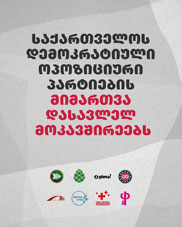
Several opposition parties in Georgia have issued a statement urging Western allies and credible international institutions to conduct an independent investigation following a BBC report suggesting the use of banned chemical substances against protesters in 2024.
The statement calls for an impartial international inquiry to establish the factual circumstances, identify those responsible, and prevent further use of similar substances. It also urges international partners to consider temporary restrictions on the supply of specialized equipment or tools that could be misused against civilians. The opposition argued that such measures, directed at the ruling Georgian Dream party, would serve as a preventive step and reduce the risk of further human rights violations.
According to the statement, the opposition is already collecting and processing relevant information in cooperation with democratic partners to provide to international institutions.
"The latest BBC investigation presented serious evidence that, in 2024, during the violent dispersal of peaceful anti-government protests, the Georgian authorities used banned chemical substances against Georgian citizens. If confirmed, this would represent a grave violation of international norms, obligations to protect human rights, and Georgia's commitments under international conventions," the statement read.
The parties noted that internal accountability is unlikely under the current government, which they described as authoritarian and illegitimate, and emphasized the need for external oversight. "An impartial internal investigation cannot be conducted. Predictably, the government does not plan to invite an international investigative mission to ensure transparency. We, the democratic opposition parties of Georgia, call on credible international institutions to conduct an independent investigation and prevent the further use of such substances," the statement continued.
The statement was signed by seven opposition parties, including Ahali, Girchi, European Georgia, the National Democratic Party, Freedom Square, Strategy Aghmashenebeli, and the Federalists.
Georgia Removed from Poland's Simplified Work Procedure
As of December 1, 2025, Georgian citizens must follow Poland's standard employment process and obtain a D-type national visa to work in nonseasonal jobs.
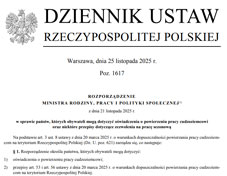
The regulation, issued on November 21 by Poland's Minister of Family, Labor and Social Policy, removed Georgia from the list of countries eligible for the simplified procedure, which allowed work for up to 24 months without a standard permit. Armenia, Belarus, Moldova, and Ukraine remain covered.
Polish authorities cited the political situation in Georgia, potential restrictions on visa-free travel, and a decrease in work permit declarations compared to 2024 as reasons for the change.
Under the previous system, employment required only an employer's declaration and a valid residence document. Now, Georgian citizens must first secure a work permit before applying for a D-type visa, which allows stays of up to one year.
Those already working under previously registered declarations may continue until the expiry date, and applications submitted before December 1 will be processed under the old rules.
In 2024, Poland deported more than 2,500 Georgian nationals, mostly for using forged documents, and over 1,500 others were reportedly involved in criminal offenses.
Polish Prime Minister Donald Tusk has linked the change to security concerns, including a review of visa requirements following an alleged Russian-backed arson attack in 2024.