Prepared by Messenger Staff
Georgia Backs UN Resolution Demanding Return of Forcibly Deported Ukrainian Children
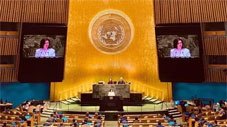
Georgia joined a broad international coalition on December 3 in supporting a United Nations General Assembly resolution that calls on Russia to immediately return Ukrainian children who were forcibly transferred or deported during the war. The measure, adopted with 91 votes in favor, urges what it describes as the "immediate, safe and unconditional" repatriation of the children. Twelve member states opposed the resolution, and 57 abstained.
The text of the resolution presses Russia to halt what it characterizes as a pattern of unlawful removals. It urges Moscow to "cease, without delay, any further practice of forcible transfer, deportation, separation from families and legal guardians, change of personal status, including through citizenship, adoption or placement in foster families, and indoctrination of Ukrainian children."
European Union High Representative Kaja Kallas praised the outcome, calling it a vital step toward accountability. "This is a landmark vote that shows the world will not look away from the suffering of these children," she said. "The international community has sent a clear message that this practice must stop and that those responsible must face justice."
Zourabichvili Warns Education Reforms Will 'Affect Everyone'
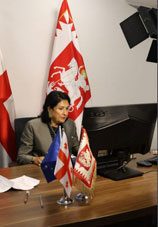
Fifth President of Georgia, Salome Zourabichvili, sharply criticized the Georgian Dream's planned education reforms, arguing that the changes will restrict opportunities for all citizens, including those who currently enjoy political privilege. Her comments came after Education Minister Givi Mikanadze outlined major policy shifts set to begin in 2026.
"The regime's policy affects everyone, oppresses everyone, and blocks everyone's opportunities," Zourabichvili wrote on social media. She warned government supporters not to assume their children will escape the impact. "Do not believe that your children will be protected by your current privileged positions tomorrow. They will have to learn from textbooks produced by a ministry commission, and they will face limits on studying abroad, unless Russia is their preferred destination. The isolation of the country will affect everyone's fate."
Under the planned changes, the government will abolish the current grant funding model in 2026. Students admitted to public universities will have their tuition fully covered by the state, while those enrolling in private universities will receive no state funding.
The ministry says current students will not be affected, while those in opposition argue that the reforms will reduce freedom of choice, limit academic mobility, and tighten government control over curriculum and textbooks.