Georgian Wheat Traditions Added to UNESCO Heritage List, Kobakhidze Calls It a Historic Moment
By Liza Mchedlidze
Monday, December 15, 2025
Georgia's centuries-old relationship with wheat received global recognition as UNESCO added Georgian wheat culture, traditions, and rituals to the Representative List of the Intangible Cultural Heritage of Humanity, a decision Georgian Dream Prime Minister Irakli Kobakhidze described as deeply meaningful for the country's identity and future.
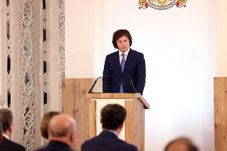
Speaking at an event organized by UNESCO to mark the decision, Kobakhidze said the inclusion reflects the broader values carried by wheat and bread in Georgian society, describing them as symbols of peace, unity, and hospitality.
"At a time when the world is in great need of consensus, the Georgian table and bread stand for hospitality and for bringing people closer together," Kobakhidze said.
He stressed that the recognition goes beyond cultural symbolism and carries practical importance for Georgia's development. According to Kobakhidze, preserving endemic wheat varieties offers long-term opportunities for agriculture, agrotourism, and the green economy.
"This decision is also a message for the future," he said. "The protection and development of endemic varieties is one of the greatest potentials of our agricultural sector. Our aim is for this tradition to remain alive and developing, creating wealth for farmers and for the country."
Kobakhidze thanked the scientists, researchers, and institutions involved in preparing the UNESCO nomination, including the Patriarchate of Georgia and representatives from several government ministries, saying the achievement was the result of years of sustained work.
"This recognition is, above all, the result of the efforts of these people," Kobakhidze said. "I congratulate all of you on this great victory. It once again shows that Georgia, with its unique culture, is a distinctive part of world civilization."
Referring to the decision made by the UNESCO Intergovernmental Committee in New Delhi, Kobakhidze called it a world-level acknowledgment of Georgia's historical connection to wheat.
"This is recognition of a truth encoded in our genetics," he said. "In Georgia, wheat has never been just food. For thousands of years, it has been an integral part of our identity, our spirituality, and our way of life."
Kobakhidze noted that Georgia is one of the oldest centers of wheat origin in the world. Of the 20 known wheat species globally, 15 grow on Georgian soil, five of them endemic and found nowhere else.
"This biodiversity is a living treasure passed down to us by our ancestors," he said.
He added that generations of labor, bread-making, and ritual practices have helped shape Georgia's national culture and social bonds.
"For centuries, the Georgian people worked the land, baked bread, and preserved traditions that strengthened families," the prime minister said.