Prepared by Messenger Staff
Opposition Leader Zurab Girchi Japaridze Released After 7-Month Prison Term
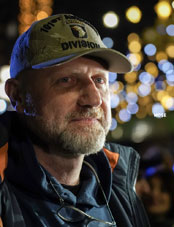
Zurab Japaridze, leader of the Coalition for Change, returned to the ongoing protest on Rustaveli Avenue after spending seven months in prison, warning that authorities are steadily narrowing the space for public dissent and could soon extend restrictions to online speech.
Speaking to journalists at the rally, Japaridze said ongoing protests remain the only visible sign that citizens reject the current political course.
"Protest today is the only public demonstration that people do not accept what is happening in this country," he said. "It shows every day that we do not accept the dictatorship that has been imposed here."
Japaridze argued that recent actions by the authorities suggest a gradual strategy to push dissent out of public view. He said protesters were first forced off the roadway, then confined to sidewalks, and are now being told to leave those areas as well.
"If we move off the sidewalk, the next step will inevitably be social networks," he said. "They push you from the street to the sidewalk, from the sidewalk into your home, and from home, you speak only online. After that, they will push you out of social networks, too. That means censorship."
He pointed out that arrests over social media posts and comments have already begun, which he described as a warning sign of further restrictions.
According to Japaridze, the effectiveness of newly adopted laws will depend on how far authorities are allowed to go without resistance. He said sustained public participation is essential, calling protest the minimum form of resistance that must continue, even as opposition groups explore other strategies.
"Bidzina Ivanishvili knows very well that the strength of the Georgian people will drive him away," Japaridze said.
Asked about unity within the opposition, Japaridze said democratic forces must act together in a visible and coordinated way so citizens feel there is a real alternative.
"People must genuinely feel that there is a united, cohesive force that is fighting," he said, adding that agreement is needed on a shared strategy, a common political vision, and leadership choices.
Papuashvili Says EU Uses Visa-Free Travel as Political Pressure Tool
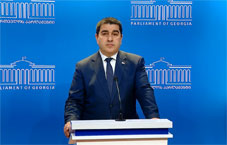
Georgian Dream Parliament Speaker Shalva Papuashvili said the Georgian government should not be blamed for the risk of losing visa-free travel with the European Union, accusing Brussels of treating the issue as a political instrument rather than a legal or technical process.
Speaking to journalists, Papuashvili argued that visa liberalization and European integration are increasingly being used to exert pressure on countries that do not align politically with the EU.
"Visa-free travel is no longer about procedures or people-to-people ties," Papuashvili said. "It has turned into a cold-blooded political weapon against other states."
He claimed that discussions in Brussels about restricting visa-free travel for specific groups, such as officials or public servants, amount to discriminatory treatment.
"If some groups are allowed to travel freely while others are not, this is legally segregation," he said, comparing such approaches to practices Europe experienced in the past. "Labeling people as offenders without court decisions and imposing restrictions is leading Europe back toward a dark chapter of its history."
Papuashvili said that decisions coming from Brussels should not be expected to follow logic or fairness, arguing that political agendas have replaced legal standards.
"We should not look for justice or rationality in Brussels' decisions," he said. "For some time now, they have acted not on principles, but on political objectives, using different issues as leverage."
He also accused EU officials and diplomats of attempting to interfere in Georgia's internal political processes in the past, including elections, claims that Brussels has repeatedly denied.
"Those attempts failed due to political immaturity and incompetence," Papuashvili said, adding that the EU overestimates its ability to pressure Georgia. "They want to act as a global policeman, but they lack the qualifications to do so and cannot seriously harm the Georgian people."