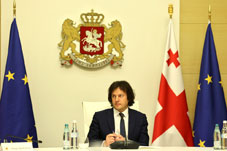
Kobakhidze Calls for Return of Public Debate, Blames 'Informal Forces' for Polarized Media
By Liza Mchedlidze
Friday, January 23, 2026
Georgian Dream Prime Minister Irakli Kobakhidze called for the restoration of public political debates, arguing that they are essential for democracy and for voters to make informed choices, in a letter published on January 22. At the same time, he accused what he described as "informal forces" and their "Georgian agents" of creating a polarized and toxic media environment.
"We are obliged to return to the Georgian people the right to enjoy one of the fundamental principles of democracy - debate," Kobakhidze wrote on Facebook, adding that citizens must be able to hear the positions of all political groups "so that every choice is made based on proper analysis."
The letter prompted immediate reactions from opposition politicians and critical broadcasters, who publicly invited Kobakhidze and other Georgian Dream officials to participate in live television debates.
Kobakhidze described debate as a "discourse about the truth" and "one of the main pillars of democracy," calling it a defining feature of European civilization. He claimed, however, that political debate in Europe has been deteriorating since 2008 due to the growing influence of what he termed a "deep state," which he described as informal oligarchic rule.
According to the Kobakhidze, these forces imposed "pseudo-liberal values" and shifted public attention to what he called artificial issues, such as LGBT and gender identity topics and green politics, at the expense of real social and economic problems. This, he argued, led to the disappearance of meaningful debate from European politics.
"Especially since 2020, well-known debates in leading European media outlets have been repeatedly canceled," Kobakhidze claimed, saying this removed opportunities for the public to hear opposing views.
Turning to Georgia, he said the same trend had partially affected the country and resulted in the collapse of what he described as a long-standing culture of political and social debate. He singled out imprisoned opposition figure Nika Gvaramia, former head of Rustavi 2 and founder of Mtavari TV, accusing him of radicalizing the media environment.
"Lies, insults, cursing, slander, and hysteria became the media standard," Kobakhidze wrote, arguing that this created a climate in which "a normal, healthy person no longer wants to participate in debates."
He said the result was a divided society deprived of the opportunity to hear different viewpoints. Kobakhidze concluded by saying the situation must be corrected so public debate can return and citizens can make political decisions based on their own judgment.