Prepared by Messenger Staff
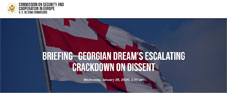
Helsinki Commission to Hold Briefing on Georgian Dream's Crackdown on Dissent
The U.S. Helsinki Commission will hold a briefing on January 28 examining the political and human rights situation in Georgia, according to information published on the commission's website.
The briefing, titled "Georgian Dream's Escalating Crackdown on Dissent," is scheduled for 11:00 p.m. Tbilisi time.
According to the commission, the ruling Georgian Dream party has "plunged Georgia into its worst human rights crisis since independence" following the October 2024 elections. The description says the authorities have adopted more than 20 new laws expanding state power, weakening judicial independence, and restricting basic freedoms.
"The crackdown has swept up civil society, journalists, and political opposition alike," the commission said. It cited the freezing of bank accounts of organizations providing legal aid to protesters, arrests of journalists, and the summoning of opposition figures for what it described as sham proceedings. Peaceful protests, the statement added, now result in heavy fines and lengthy prison sentences.
The briefing will focus on the deteriorating human rights environment in Georgia, the government's tactics to suppress and demoralize dissent, and possible paths forward for the country.
The panel will feature Dr. Claire Kaiser, senior managing director at McLarty Associates; Laura Thornton, senior director of Global Democracy Programs at the McCain Institute; and Olesya Vartanyan, a researcher at George Mason University.
Journalists' Ethics Charter Urges Repeal of Court Media Restrictions
The Charter of Journalistic Ethics has called on the Georgian Dream parliament to repeal recently adopted restrictions on media work in courts, saying the new rules have sharply worsened conditions for journalists. The organization also urged the High Council of Justice to ensure basic and humane working conditions for reporters covering court proceedings.
In a statement, the Charter said amendments to the Law on Common Courts adopted in June 2025 banned photo and video recording, broadcasting, and audio recording not only inside courtrooms but across court buildings and courtyards.
"Unjustified and unfounded restrictions have made the situation of the media in the courts extremely difficult," the statement said, adding that journalists are now forced to wait for hours outside the Tbilisi City Court and are escorted briefly inside only to record short interviews with lawyers, prosecutors, and other participants.
According to the Charter, the court administration has failed to provide even minimal working conditions. "Journalists and cameramen have to work outdoors, in the sun or in unbearable frost, rain, and wind," the statement noted.
The organization stressed that reporters are making "incredible efforts" to inform the public despite the restrictions and said their commitment to the profession and public interest should not come at the cost of their health.
"The Charter of Journalistic Ethics demands from the Georgian Dream parliament to repeal the newly adopted norms restricting the work of the media in the courts," the statement said, calling on the High Council of Justice to ensure that journalists can cover court-related news "without putting their health and lives at risk."