Prepared by Messenger Staff
Israeli Ambassador Seeks Meeting with Georgian Government Amid Regional Crisis
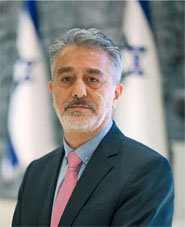
Israel's Ambassador to Georgia, H.E. Walid Abu Hayam, has requested a meeting with Georgian officials as the conflict in the Middle East continues to escalate.
"Against the background of the developing events, I have a desire to meet with official representatives from the Georgian government," Ambassador Abu Hayam stated. He noted that while a meeting has not yet taken place, he hopes it will happen soon.
The ambassador addressed the situation of the thousands of Israelis currently in Georgia. He acknowledged that many are anxious about the events unfolding in their homeland, especially with Israel's airspace currently closed to travel.
"Currently, several thousand Israelis are in Georgia, and they like being here. I am sure they are very worried about what is happening in their homeland, but right now Israel's airspace is closed," the ambassador said. He added that once flights resume, his office will assist those looking to return.
Ambassador Abu Hayam also offered reassurances regarding the safety of Georgian citizens currently in Israel. He emphasized that the Israeli government is working to protect everyone within its borders, regardless of their nationality.
"There are Georgian citizens in Israel as well, and I want them to know that we are protecting not only our own citizens but everyone who is in Israel," he said.
The ambassador confirmed that diplomatic channels remain open between the two nations. He noted that his team is in constant contact with the Georgian Embassy in Tel Aviv, which is also communicating with Israel's Ministry of Foreign Affairs in Jerusalem.
"If they need anything, they will receive maximum assistance," the ambassador promised.
Judge Closes Trial of Former Defense Minister Bacho Akhalaia
Judge Nino Galustashvili ruled on Monday to close the court proceedings against former Defense Minister Bacho Akhalaia, granting a motion filed by the prosecution. The decision, which the defense strongly opposed, means the public and media will be barred from the hearings.
During the session, Akhalaia personally addressed the judge to argue against the closure. He claimed there was no legal or security-related reason to keep the trial behind closed doors.
"My opening statement, my closing statement - why should they be closed?" Akhalaia asked the judge. He suggested that the only secrets involved in the case were "illegal actions" by law enforcement.
Akhalaia further warned the judge that granting the prosecution's request would be a violation of the law. "If you make this decision, it will be an official crime," he stated. He also accused the court of an "abuse of authority" regarding his legal representation and the handling of the case.
The prosecution argued that closing the trial was necessary based on specific circumstances of the case, though these details were not made public. Judge Galustashvili agreed with their reasoning.
"In the present case, the motion to close and the circumstances pointed out by the prosecution side are well-founded and should be granted," Galustashvili stated.
The former minister insisted that the "essential interest of justice" requires evidence to be presented openly if someone is accused of a crime. Despite his protests, the judge finalized the order to fully close the case.