Prepared by Messenger Staff
ECHR Rules Georgia Used Unjustified Force in 2019 Protest Crackdown
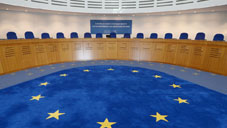
The European Court of Human Rights ruled on 11 December 2025 that Georgia unlawfully used force, including rubber bullets, to disperse a mass protest outside Parliament in June 2019. In the Grand Chamber judgment in Tsaava and Others v. Georgia, the Court found violations of the prohibition of inhuman or degrading treatment, freedom of expression, and freedom of assembly.
The case involved 26 protesters and journalists injured during the crackdown. The Court said 24 of them were subjected to inhuman or degrading treatment and that the authorities failed to carry out an effective investigation. It noted that the inquiry had lasted more than five years without identifying those who ordered or used excessive force.
Judges highlighted that police fired around 800 rubber bullets in three to four hours, often toward people's heads and upper bodies. The ruling said "the police had used rubber bullets as a general crowd control weapon" and that officers issued no warnings and had not been trained on the risks. Injuries included open wounds, fractured bones, and permanent loss of eyesight.
Fourteen applicants were journalists. The Court said their treatment "had not been justified or proportionate" and violated freedom of expression. Although some protesters attempted to enter Parliament, the judges found that no dispersal order or warning was given and that the operation "was not justified."
The Court said Georgia lacked adequate rules governing the use of rubber bullets and stressed that states must ensure such projectiles are "appropriately circumscribed." It instructed Georgia to strengthen its legal framework and to conduct an investigation capable of identifying and, if needed, punishing those responsible, including senior officers.
The judgment also referenced concerns about plans to abolish the Special Investigation Service, noting that European bodies had urged authorities to preserve an independent accountability mechanism.
Georgia was ordered to pay substantial compensation, including for the permanent loss of sight. The decision is final and now moves to the Committee of Ministers for supervision of its implementation.
TI Georgia Says 'Group Violence' Charges Against 2024 Protesters Collapsed
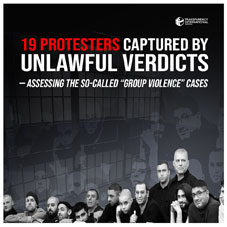
Transparency International Georgia says prosecutors failed to prove the main accusation in the so-called group violence cases linked to the November and December 2024 protests. According to the organization, "the prosecution controlled by Ivanishvili failed to prove the artificially constructed charge of group violence even before the court loyal to Ivanishvili."
TI Georgia states that the Ministry of Internal Affairs, the Prosecutor's Office and the courts worked together to carry out a political order. It says the authorities attempted to blame peaceful, pro-European demonstrators for police injuries and property damage, yet "the court still failed to see any causal link, not even the smallest, between the actions attributed to peaceful demonstrators and the harm claimed by police officers and other witnesses."
Although the courts rejected the group violence charge, defendants were still convicted for organizing or participating in group actions that grossly violated public order. Three received two-and-a-half-year sentences, while the rest received two years.
The organization argues that the rulings were political and not based on law. It says the judges acted as political actors serving the ruling party and that "justice was not served." TI Georgia also criticizes the courts for changing the legal qualification at the verdict stage, which it says violated the right to a fair trial. It notes that the decisions relied on video recordings obtained unlawfully, and that no evidence of coordinated group behavior was presented, even though this is required under Article 226.
TI Georgia concludes that the rulings were unlawful and unsubstantiated and that the process served only to punish protest participants on fabricated grounds.