Prepared by Messenger Staff
Coalition for Change Submits Evidence of Alleged Chemical Abuse to International Organizations
The Coalition for Change announced on Friday that it has compiled extensive documentation regarding alleged chemical abuse and torture by government authorities during demonstrations last November and December and is forwarding the material to international bodies. The coalition said it hopes the submissions will prompt the creation of an international investigative mechanism.
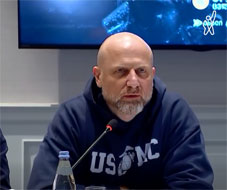
"At the moment, we have identified nine international structures where requests will be sent to establish an investigative mechanism regarding this issue," said Zurab Girchi Japaridze, a coalition leader, at a briefing. "These documents have already been sent electronically to some organizations. Others will be sent today and tomorrow. Representatives of non-governmental organizations are also participating, which is important because some international bodies do not allow political parties to submit applications directly. We are coordinating fully with civil society. Everyone who can contribute to this process is involved, and this cooperation is critical to achieving results."
Japaridze described the effort as one of the coalition's main initiatives in recent weeks. He said the focus is on gathering verified facts and presenting them to institutions capable of conducting an independent investigation. "This is about systematically documenting the alleged torture and chemical poisoning of citizens. We are ensuring that all information is submitted where it can have real impact," he said.
Several Georgian NGOs have already submitted joint appeals to the Director-General of the UN Organization for the Prohibition of Chemical Weapons (OPCW), UN Special Rapporteurs, and the Council of Europe Commissioner for Human Rights. The appeals cite "alleged serious human rights violations and possible use of chemical and experimental agents by law enforcement agencies" during protests. The NGOs called on the OPCW to consider sending a fact-finding or investigative mission to Georgia to examine the claims.
The coalition said its submissions aim to complement the work of civil society and provide international actors with the necessary documentation to pursue an independent inquiry. Japaridze emphasized that the process involves both political actors and NGOs to maximize accountability and transparency.
Interior Ministry Issues Restrictions Ahead of Holiday Protests
The Georgian Interior Ministry has ordered protesters to confine rallies on Rustaveli Avenue to the parliament steps and nearby areas, warning against obstructing pedestrian or vehicle traffic. The instructions cover demonstrations from December 21 through January 9.
The move follows recent amendments to anti-protest laws that expand restrictions on road and pedestrian blockages and allow police to change the location or route of assemblies. Violations can result in 15 to 20 days of administrative detention, with repeated offenses carrying up to one year in prison. Assemblies are also required to occur without marches.
Police have recently warned demonstrators in person and ordered them off sidewalks, but protests have continued without reported detentions under the newest rules. Georgian Dream has tightened protest laws several times over the past year, making repeated acts of road obstruction or covering faces subject to criminal penalties.
Protesters and civil society groups have criticized the legislation as "unconstitutional," arguing it criminalizes the right to peaceful assembly. Demonstrations on Rustaveli Avenue have continued for nearly 400 days, with protesters adapting to evening marches downtown after police pushed them onto sidewalks.