Prepared by Messenger Staff
Georgia Provides New Aid to Ukraine and Prolongs Assistance for Ukrainians in the Country
Georgia has announced additional humanitarian steps in support of Ukraine, including the delivery of energy equipment and the extension of financial assistance for Ukrainians who relocated to Georgia after the outbreak of the war.
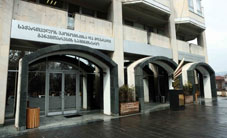
The Ministry of Economy said on December 29 that nine generators of different capacities were sent to Ukraine by the state-owned Georgian Energy Development Fund. The equipment is being transported overland and will be transferred to Ukrainian authorities free of charge through Georgia's embassy in Kyiv.
Earlier, on December 26, the government approved the continuation of a state support program for Ukrainian citizens and permanent residents who entered Georgia following Russia's full-scale invasion. Georgian Dream Prime Minister Irakli Kobakhidze signed the amendment extending the scheme until April 1, 2026.
The program provides monthly payments of 300 GEL to Ukrainian families and 45 GEL to individual beneficiaries. Officials noted that the individual allowance will cease if a recipient qualifies for assistance under Georgia's international protection legislation or leaves the country. Family payments will also end if all members relocate abroad.
Papuashvili Criticizes Brussels Over EU Policies
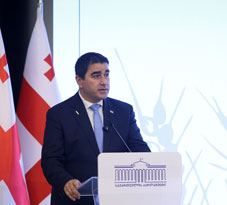
Georgian Dream Parliament Speaker Shalva Papuashvili has sharply criticized the European Union's leadership, saying Brussels has abandoned justice, logic, and rational decision-making in its policies toward Georgia and Ukraine.
"When speaking about Brussels, it is difficult to look for justice, logic, or rationality," Papuashvili said, adding that "justice has long been lost in the decisions they make."
According to Papuashvili, the current EU leadership is acting outside the interests of European societies and following a separate political agenda. He said a change in Brussels' leadership is necessary to restore trust and balance.
"We will not trade sovereignty for any form of political blackmail," Papuashvili stated. He argued that many Georgians no longer believe EU decisions are based on objective criteria, claiming instead that they serve "harmful political goals."
Papuashvili also criticized the EU's decision to introduce visa requirements for holders of Georgian diplomatic passports, calling it a violation of the 2010 agreement between Georgia and the European Union. "In an attempt to change power in Georgia, they went so far as to violate international law," he said.
He accused the EU bureaucracy of pushing the bloc toward confrontation and instability. "This bureaucracy has brought the European Union to the edge of a civilizational abyss," Papuashvili said, adding that Georgia would not be able to find common ground with such an approach.
Referring to the war in Ukraine and relations with Russia, Papuashvili said Georgia avoided destruction by refusing to follow what he described as Brussels' calls for escalation. "If we had listened to Brussels, today we would be clearing rubble," he said. "Those who prepare for war will always end up with war."
Papuashvili said that relations could improve only if the EU leadership began to reflect the will of European citizens. "As soon as Brussels starts listening to European peoples, it will become possible to normalize our relations," he said.