The News in Brief
Prepared by Messenger Staff
Wednesday, April 22, 2026
Amnesty: Georgia Saw 'Systemic Crackdown on Dissent' in 2025
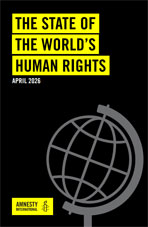
Amnesty International said Georgia "plunged head-on into authoritarian practices, with systemic crackdowns on dissent" in its annual report published on April 21.
The report says freedoms of expression, assembly and association were "severely curtailed," citing "repressive legislation, unfair trials and police impunity." Protesters, journalists and activists faced "arbitrary detention, torture and other ill-treatment," while NGOs and independent media were targeted with harassment, asset freezes and regulatory pressure, including under "foreign agent"-style laws. Amnesty points to the freezing of bank accounts of seven NGOs and repeated questioning of their leaders.
Authorities "criminalized peaceful acts such as wearing masks or standing on sidewalks," the report says, adding that demonstrations were met with "police beatings, tear gas, rubber bullets and water cannon reportedly laced with toxic chemicals." It also alleges that masked officers and unidentified men linked to authorities assaulted detainees and protesters.
According to Amnesty, detainees were subjected to unfair trials "marked by procedural violations and prosecutorial bias," with cases including journalist Mzia Amaghlobeli. "Many of those detained were denied access to lawyers, relatives, or urgent medical care," the report says.
The report also cites gender-based violence against women protesters, including "sexist insults, threats of sexual assault and degrading full strip searches," and says "misogynistic and sexist rhetoric from senior officials" contributed to the abuse. It adds that independent media faced "smear campaigns, fines and criminal probes" as part of broader efforts to suppress dissent.
EU Says Georgia's Participation in Connectivity Projects Depends on Broader Engagement
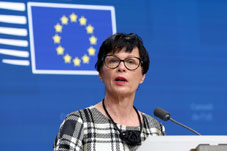
European Commissioner for Enlargement Marta Kos said the European Union is ready to involve Georgia in regional connectivity projects, but only if Tbilisi shows willingness to cooperate on broader political issues.
Speaking on April 20 at an extraordinary meeting of the European Parliament's Committee on Foreign Affairs, Kos responded to Romanian MEP Cristian Vasile Terhes, who raised the importance of the Middle Corridor as a key trade route between Europe and Asia and asked about EU engagement with Georgia, Armenia, and Azerbaijan.
Kos said the route has gained importance amid global disruptions. "There is no trade route in the north anymore. There are no trade routes in the south anymore. So the best is the Middle Corridor, the Peace Corridor, whatever you call it, and we are engaged," she said.
She said the EU has maintained active engagement with Armenia, Azerbaijan, and Turkey, but noted limited recent contact with Georgia. "Not to Georgia because of the reasons you have mentioned," she said, without elaborating further.
Kos added that connectivity includes more than transport. "This connectivity agenda is not just about transport, it is energy, digital, and so on," she said, stressing energy security concerns.
She also referred to an EU-backed electricity interconnection project involving Armenia and Georgia, saying, "indeed, we can't speak about the real connectivity agenda without Georgia."
"So whatever we do there and talk to Armenia, we also consider Georgia," she said. "We are open to involving Georgia, we will be only capable to involve Georgia to the extent that they also show that they want to engage in other areas."