Georgian Dream Announces Police Unit to Monitor 'Hate Speech' Online and in Public
By Messenger Staff
Tuesday, May 19, 2026
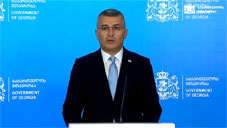
Georgian Dream State Minister for Coordination of Law Enforcement Bodies Mamuka Mdinaradze announced on May 18 that a special unit will be established within the Interior Ministry to "systematically monitor" hate speech, offensive campaigns, and aggressive communication in public spaces and respond to them proactively.
Mdinaradze, a former State Security Service chief recently appointed to the newly created post, said the unit would be established "in the shortest possible time" and would deal with "any type of public communication that contains hate speech, incitement of enmity, violation of dignity, and other similar acts." He stressed that the unit would operate "in a proactive mode," meaning its work would not depend solely on citizen complaints, and that it could independently send materials to court.
He framed the move as consistent with practices in the UK, France, and Germany, where he said state institutions "actively protect the public sphere from hate speech and aggressive campaigns." He linked the initiative to Kobakhidze's earlier call to "open the space for debates," describing the new unit as "the next important step" in that direction. He also accused an unspecified "external force" of deliberately encouraging "confrontation, hostility, and polarization" in Georgia. Despite the scope of the announcement, Mdinaradze insisted the purpose was not to restrict free expression, saying free discussion "should not become a basis for justifying communication that is violent, offensive, or encourages public confrontation."
The announcement drew immediate criticism from human rights groups. Tamar Oniani of the Georgian Young Lawyers' Association called the mechanism "a form of censorship" with "nothing to do with balancing interests in a democratic society." Tamta Mikeladze of the Social Justice Center said that while monitoring hate speech is "generally legitimate," in democratic systems the mandate should belong to the public defender rather than the police.
The move follows legislative amendments adopted in February 2025 that made insulting public officials and civil servants an administrative offense.