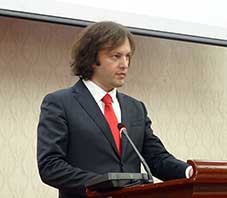
Kobakhidze Accuses Opposition of Adopting Anti-Russian Stance Only After Ukraine War
By Messenger Staff
Wednesday, August 5, 2026
Georgian Dream Prime Minister Irakli Kobakhidze has questioned why Georgia's opposition adopted what he described as a radical anti-Russian position after Russia's full scale invasion of Ukraine in 2022, instead of following the 2008 Russia-Georgia war.
In a statement published on social media, Kobakhidze said the August 2008 war, which left around 20% of Georgia's territory under Russian occupation, should have been the point at which opposition politicians took a tougher stance toward Moscow.
"It is logical that if someone were to develop a radical anti-Russian sentiment, it should have happened not in 2022, but after 2008," Kobakhidze said. "Why did they become Russophobes now and not when it came to Georgia?"
Kobakhidze said the war claimed 412 lives, injured 2,232 people, displaced around 30,000 Georgians and left more than 120 settlements beyond the occupation line.
He claimed that despite those consequences, the former United National Movement government continued to promote tourism, trade, investment and cultural ties with Russia, later introducing visa-free travel for Russian citizens. Kobakhidze also said neither the party nor its supporters objected to those policies at the time.
Kobakhidze named opposition politicians Elene Khoshtaria and Zurab Girchi Japaridze, as well as public figure Misha Mshvildadze, claiming they welcomed Russian tourists and investment after the war, despite Russia's recognition of Abkhazia and South Ossetia and the absence of diplomatic relations between the two countries.
He also accused opposition parties, non-governmental organizations and activists of acting in the interests of external forces, saying their rhetoric toward Russia became significantly stronger only after the war in Ukraine.
"The rhetoric of foreign agents towards Russia was not so harsh and negative either before the 2008 war or after the August war," he said. "The foreign agents declared Russia an implacable enemy only after it invaded Ukraine for the second time."
Kobakhidze said the public should ask why opposition groups became openly anti-Russian after the invasion of Ukraine rather than after the 2008 war, when Georgia itself was the victim of Russian military aggression.