Iran Seeks To Call The Shots Over Shipping Through The Strait Of Hormuz
By Nino Kopaleishvili
Monday, August 10, 2026
Washington Expects Deal To Resume Shipping Through The Strait
Iran is seeking a major concession by proposing to control traffic entering the Persian Gulf through the Strait of Hormuz as part of negotiations with Oman this August.
Early Sunday, Iran's Supreme National Security Council said the U.S. should withdraw its military forces, compensate Iran for war damage, lift sanctions, and release Iran's frozen assets.
Over the weekend, Iran hit another oil tanker affiliated with the United Arab Emirates; no injuries were reported. Meanwhile, Iranian officials have made clear that although the agreement is nearing completion, the Strait will not be reopened unless other conditions are also met, Reuters reported.
On Friday, a U.S. official told Reuters that Washington expects an agreement between Iran and Oman that could pave the way for shipping through the Strait of Hormuz to resume in the near future.
The two countries have reached an agreement on "geographic coordinates," and Tehran is eager to finalize an agreement with Oman on a shipping route, Reuters reported on Thursday, August 6.
On Tuesday, U.S. President Donald Trump told reporters that negotiations with Iran "are moving along very nicely" and that more would be known in the next 48 hours.
"They had a very good day. Negotiations were good. The stock market was up tremendously over the last three, four days," President Trump said.
Reports suggest Iran intends to set a "service" fee of between 5% and 7% of the value of cargoes shipped through the Strait, while Oman is considering a fee of approximately 3%. Washington, meanwhile, supports a return to the status quo ante bellum-meaning no fees at all.
The proposal has raised questions over the deal's feasibility, with some experts already expressing doubts.
The critical waterway connecting the Persian Gulf and the Gulf of Oman lies between Iran to the north and Oman to the south and serves as a vital maritime route for several Gulf states. Normally, around 20%-27% of the world's liquefied natural gas and more than 25% of seaborne oil trade pass through the Strait of Hormuz. The chokepoint is pivotal for global energy supplies. The Gulf region includes six Arab states: Bahrain, Kuwait, Oman, Qatar, Saudi Arabia, and the United Arab Emirates.
During peace talks, Iran made clear it intends to retaliate by targeting the critical energy infrastructure of the Gulf states in response to any new U.S. military attack.
In peacetime, around 130-140 vessels typically transited the waterway daily, but traffic has plunged since the war started on February 28, 2026. According to Reuters, approximately 33 vessels passed through the Strait last week, compared with 50 vessels the previous week.
In collaboration with other maritime organizations, the World Shipping Council has issued a joint open letter to the United Nations secretary-general and the International Maritime Organization secretary-general expressing concerns about the possible introduction of compulsory tolls or service fees, describing them as "a significant departure from established international practice."
"The ability of merchant ships to navigate international waterways safely, predictably and without unnecessary impediment is fundamental," the letter says.
The signatories consider that such a precedent could create uncertainty for global commerce and raise questions about the legal framework governing international shipping and international straits under international law, including the United Nations Convention on the Law of the Sea (UNCLOS).
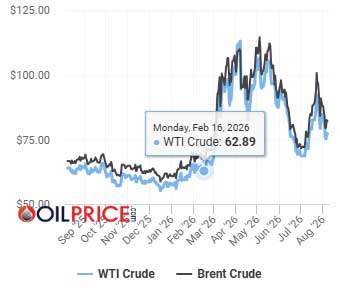
Oil Prices Pull Back From Wartime Highs
Recent developments in the Middle East have affected the Brent crude benchmark over the past five months. Oil prices surged during the initial phase of the war, in March and April, before pulling back from those highs in recent weeks.
On Friday, the trading range for Brent crude futures was between USD 81.66 and USD 84.40, according to Investing.com. Brent crude closed at USD 82.21 a barrel on August 7. The trading range for WTI crude oil was between USD 76.58 and USD 78.75.
At the start of the U.S.-Israel war with Iran, economic analysts anticipated that, despite the resilience of U.S. markets to oil shocks, a prolonged conflict could increase economic risks and affect equity markets through sustained higher oil prices and inflationary pressures.