Papuashvili Accuses EU of 'Soviet Methods' Toward Georgia, Says Europe Faces Identity Crisis
By Messenger Staff
Tuesday, October 27, 2026
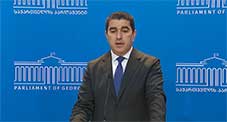
Georgian Dream Parliament Speaker Shalva Papuashvili has accused the European Commission of using "Soviet methods" against Georgia and argued that the EU's policies are contributing to a wider crisis of identity across Europe.
Speaking to journalists about the European Commission's upcoming enlargement report, due on November 4, Papuashvili said Brussels was choosing confrontation, pressure and coercion over dialogue with Georgia.
"We are sitting at the dialogue table with the European Union and waiting for EU representatives to join us, but instead they are choosing a confrontational path," he said, describing the Commission's foreign policy as "immature" and arguing that its approach also affected other candidate countries.
Papuashvili accused the Commission's leadership of retaining Soviet-era methods in its dealings with smaller countries, saying that despite their backgrounds, its leaders had failed to abandon practices associated with the Soviet Union.
He also linked recent protests in several European cities to what he described as a crisis of European identity. According to Papuashvili, curfews and the use of force against demonstrators would not resolve the underlying problem, which he characterized as a civilizational crisis.
"The European Union is driving Europe toward a civilizational abyss," he said, arguing that the bloc needed to reconsider its identity and the values on which it stands.
Papuashvili claimed that scenes of violence in European cities resembled those witnessed in Georgia, including in their visual presentation. Referring to images from demonstrations, he remarked that torches were being used "as machine guns."
He further accused EU institutions of applying double standards by condemning violence in other countries while overlooking incidents in Georgia when protesters carried European Union flags.
"When you turn a blind eye to this violence in Georgia, you will receive this violence in your own capital," Papuashvili said, arguing that the EU's response to events in Georgia had consequences for other European countries.
He maintained that the Georgian Dream government remained willing to engage in dialogue with Brussels, while accusing the European Commission of undermining European values through its confrontational approach. His remarks came ahead of the Commission's annual assessment of EU candidate countries, scheduled for November 4.