Georgia Skips EU Connectivity Meeting Over Invitation Dispute
By Messenger Staff
Tuesday, November 17, 2026
Georgia did not attend the EU Connectivity Ministerial in Brussels on November 16, with the Foreign Ministry citing a dispute over the level of the invitation.
The ministry said Georgia had not received an invitation at an appropriate level and, consequently, no Georgian representative took part in the meeting. It nevertheless stressed that Tbilisi remained committed to cooperation with the European Union and was willing to participate in future meetings if invited at the appropriate level.
Held alongside the EU Foreign Affairs Council, the meeting brought together representatives from the South Caucasus, Central Asia, Moldova, Turkey and Ukraine to discuss connectivity issues.
Georgia also declined to attend a similar gathering in Luxembourg last year, with the Foreign Ministry giving the same reason.
The latest announcement came a day after local media outlet Publika reported that Georgian Ambassador to the EU Vakhtang Makharoblishvili had confirmed his participation. The report followed media accounts that Georgia had again received an invitation at a lower diplomatic level.
EU Enlargement Commissioner Marta Kos addressed the issue on November 16, saying Brussels had invited Georgian representatives to connectivity-related events several times, although not at the highest political level.
"Now, for two or three times we have invited the representatives of Georgia to our events on connectivity, and they never came. So we try to engage, we invite them. They don't want to come. We don't invite on the highest level," Kos told Deutsche Welle.
She also referred to the EU's unsuccessful attempts to engage Tbilisi in dialogue over visa liberalisation, expressing hope that a discussion among EU foreign ministers scheduled for January would bring progress.
The discussion was previously announced by EU foreign policy chief Kaja Kallas, who said foreign ministers would hold a deeper discussion on Georgia.
Responding to a separate question from Euroscope, Kos said the EU did not want Georgia excluded from cooperation in trade, transport, energy and digital connectivity.
"We will invite them again and again," she said, adding that engagement required efforts from both sides and that Georgia also had to meet certain conditions.
Georgian Dream Prime Minister Irakli Kobakhidze defended the government's position, saying Georgia would participate in international events where it received what he called a "dignified invitation."
"The Georgian people deserve a fair and healthy approach, which we do not see today," Kobakhidze told journalists.
He added that Georgia would be appropriately represented when treated accordingly, while responding to what he described as a different attitude from European partners.
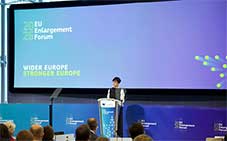
Commenting on Georgia's exclusion from the EU Enlargement Forum, Kobakhidze also accused European officials of acting against the bloc's interests.
"For us, this is further confirmation that the European bureaucracy is not acting in accordance with Europe's objective interests," he said.