Lavrov Welcomes Georgian Dream's Position on Dialogue as Russia Seeks to Normalise Relations
By Messenger Staff
Thursday, November 26, 2026
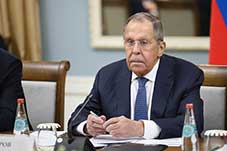
Russian Foreign Minister Sergey Lavrov has said Moscow is interested in normalising relations with Georgia, welcoming Georgian Dream Foreign Minister Maka Botchorishvili's recent defence of renewed contacts with Russia. Meanwhile, Belarusian Foreign Minister Maxim Ryzhenkov has suggested that further talks between Moscow and Tbilisi could eventually move to the capitals of the two countries.
The remarks come following a November 19 meeting in Minsk between Georgian Dream First Deputy Foreign Minister Giorgi Zurabashvili, recently appointed special representative for relations with Russia, and Russian Deputy Foreign Minister Mikhail Galuzin. The meeting marked the first direct contact between Georgian and Russian representatives in this format since 2008, with Moscow describing it as a resumption of direct dialogue.
Speaking on November 25 after meeting Ryzhenkov in Belarus, Lavrov was asked whether the Minsk meeting was a one-off encounter or could lead to further talks in Belarus.
"I would like to thank our Belarusian friends for providing a venue for talks on this issue. We are interested in normalising relations with Georgia," Lavrov said, according to the Russian Foreign Ministry.
He also welcomed Botchorishvili's recent statement that there was no need to fear contacts with Russia, describing her position as pragmatic and in the interests of the Georgian people and bilateral relations.
Lavrov's remarks referred to comments Botchorishvili made during an interview with Imedi TV on November 19, in which she defended the decision to hold the meeting in Minsk, saying the venue was not the main consideration.
She argued that direct dialogue was necessary to address issues affecting Georgia and its citizens, adding that the meeting had been held to discuss matters requiring timely attention.
Botchorishvili also responded to criticism in Tbilisi that the renewed contacts could signal a de facto restoration of diplomatic relations or replace the Geneva International Discussions. She dismissed the suggestion that dialogue with Russia should be considered unacceptable, arguing that communication was necessary given the unresolved problems between the two countries.
She said critics had sought to create fear around the idea of talking to Moscow, despite Russia being the country with which Georgia has some of its most serious outstanding issues.
"Nothing is frightening about this when you talk to the one with whom you have problems. This is necessary," Botchorishvili said.
Separately, Belarusian Foreign Minister Maxim Ryzhenkov also commented on the renewed dialogue on November 25, suggesting that future meetings could eventually take place in Moscow and Tbilisi.
According to Russian state news agency TASS, Ryzhenkov said the recent negotiations in Minsk had been lengthy and substantive, with both sides reporting progress in building mutual trust.
He said this could create conditions for moving further discussions to the capitals of the two countries, adding that direct meetings in Moscow and Tbilisi would be possible if the sides reached a sufficient level of mutual understanding.
The renewed contacts come against the backdrop of strained relations between Georgia and Russia, which severed diplomatic ties following the 2008 war. The Geneva International Discussions remain the main international format addressing the consequences of the conflict and related security issues.