Georgia's Russia Envoy Defends Renewed Talks, Criticises Moscow's Demands
By Messenger Staff
Friday, November 27, 2026
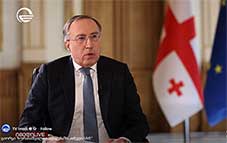
Georgian Dream's new special representative for relations with Russia, Giorgi Zurabashvili, has defended the resumption of direct talks with Moscow, saying dialogue is necessary to address issues such as Georgia's sovereignty and the occupation of its territories. At the same time, he criticised Russia's demands during the talks, arguing that they were politically motivated and strengthened the Georgian opposition.
Speaking to Imedi TV on November 25, Zurabashvili discussed his November 19 meeting in Minsk with Russian Deputy Foreign Minister Mikhail Galuzin. He said the main priority for the Georgian side was to secure the lifting of Russian restrictions on several Georgian wine producers, but Moscow showed no willingness to reconsider them.
According to Zurabashvili, Galuzin cited concerns about wine quality, alleged support for Ukraine and anti-Russian messaging as reasons for the restrictions. Zurabashvili rejected the accusations, saying the Russian official had failed to provide any evidence.
"I was surprised and stunned by this news, because nothing of the sort is happening," he told Imedi, adding that the allegations had no factual basis. He also said Galuzin had indicated that Russia was considering restrictions on two more Georgian wine companies.
The wine dispute was not the only issue raised by Moscow. Zurabashvili said the Russian side had presented around ten issues, mostly related to humanitarian matters, while Georgia had raised several technical questions. One Russian proposal involved a partnership between Don State Technical University in Rostov-on-Don and a Georgian state university.
Zurabashvili argued that even such proposals could serve a political purpose, reinforcing claims that the Georgian Dream government is pro-Russian.
"This may seem like a truly harmless matter, but if you look closely and analyse it, all of this is directed against the Georgian Dream government," he said. He added that Russia's demands were giving the opposition "more energy."
Despite his criticism of Moscow's approach, Zurabashvili insisted that the dialogue should continue. Asked about the purpose of the talks, he pointed to the long-standing disputes between the two countries, including Georgia's sovereignty, internationally recognised borders and the occupation of its territories.
"Precisely because of these problems, and for these problems, dialogue is necessary," he said, arguing that the two sides needed to discuss their disagreements and look for ways to resolve them.
His comments have raised further questions about the scope of the talks. The format was originally intended to cover trade, economic, humanitarian and cultural issues. Zurabashvili's remarks suggest that Georgia also wants to discuss occupation and sovereignty, although he did not announce any formal change to the mandate.
The November 19 meeting in Minsk marked the resumption of direct talks between the two sides. The format, known as the Abashidze-Karasin dialogue, was launched in 2012. Its renewed use has raised concerns among former Georgian diplomats, who have warned that expanding its mandate could lead to a de facto upgrade in relations with Moscow.
Georgia and Russia have had no diplomatic relations since the 2008 war. Russia continues to occupy Abkhazia and the Tskhinvali region, which it recognises as independent states.
Zurabashvili was appointed as Georgian Dream Prime Minister Irakli Kobakhidze's special representative for relations with Russia on October 21, while retaining his position as the Foreign Ministry's first deputy minister. He said continued dialogue was necessary to improve relations and eventually achieve the reunification of Georgia's territories.
"Our main dream" is to achieve "a united, strong Georgia," he said.